
- 28/05/2026
- Tags: Upper Mustang
- Himalayan Wander Walkers
Vajrakilaya Sand Mandala in Upper Mustang
The Vajrakilaya Sand Mandala Ceremony is a sacred Tibetan Buddhist ritual devoted to Vajrakilaya, a powerful wrathful deity believed to remove obstacles, fears, and negative energies from our lives. During the ceremony, monks meticulously create an intricate sand mandala using millions of grains of colored sand arranged into precise geometric patterns and sacred iconography, each element embodying profound spiritual symbolism and Buddhist teachings. The creation of the mandala is both an extraordinary artistic achievement and a deeply meditative spiritual practice, representing purification, protection, and the transformation of negativity into wisdom and compassion. Upon completion, the mandala is ritually dismantled to symbolize the impermanence of all phenomena and the importance of non-attachment, and the blessed sand is then dispersed to share its healing energy and blessings with the world. This ceremony will be held according to the Solar Calendar from 25 August to 01 September 2026, corresponding to the 13th to the 19th days of the 7th lunar month.
Vajrakilaya Sand Mandala Ceremony is a sacred Tibetan Buddhist ritual focused on the deity Vajrakilaya, who is believed to remove obstacles, fears, and negative energies from our lives. During the ceremony, monks carefully create an intricate sand mandala, using millions of grains and coloured sand to form geometric patterns and iconography, reflecting profound spiritual meanings and teachings. This process is not only a display of artistic skill but also a spiritual practice, representing purification, protection, and the transformation of negativity into wisdom and compassion. At the end of the ritual, the mandala is ritually dismantled, symbolizing the impermanence of life and the act of sharing blessings with the world.
On this page 8 sections
Origins and History of Sand Mandala
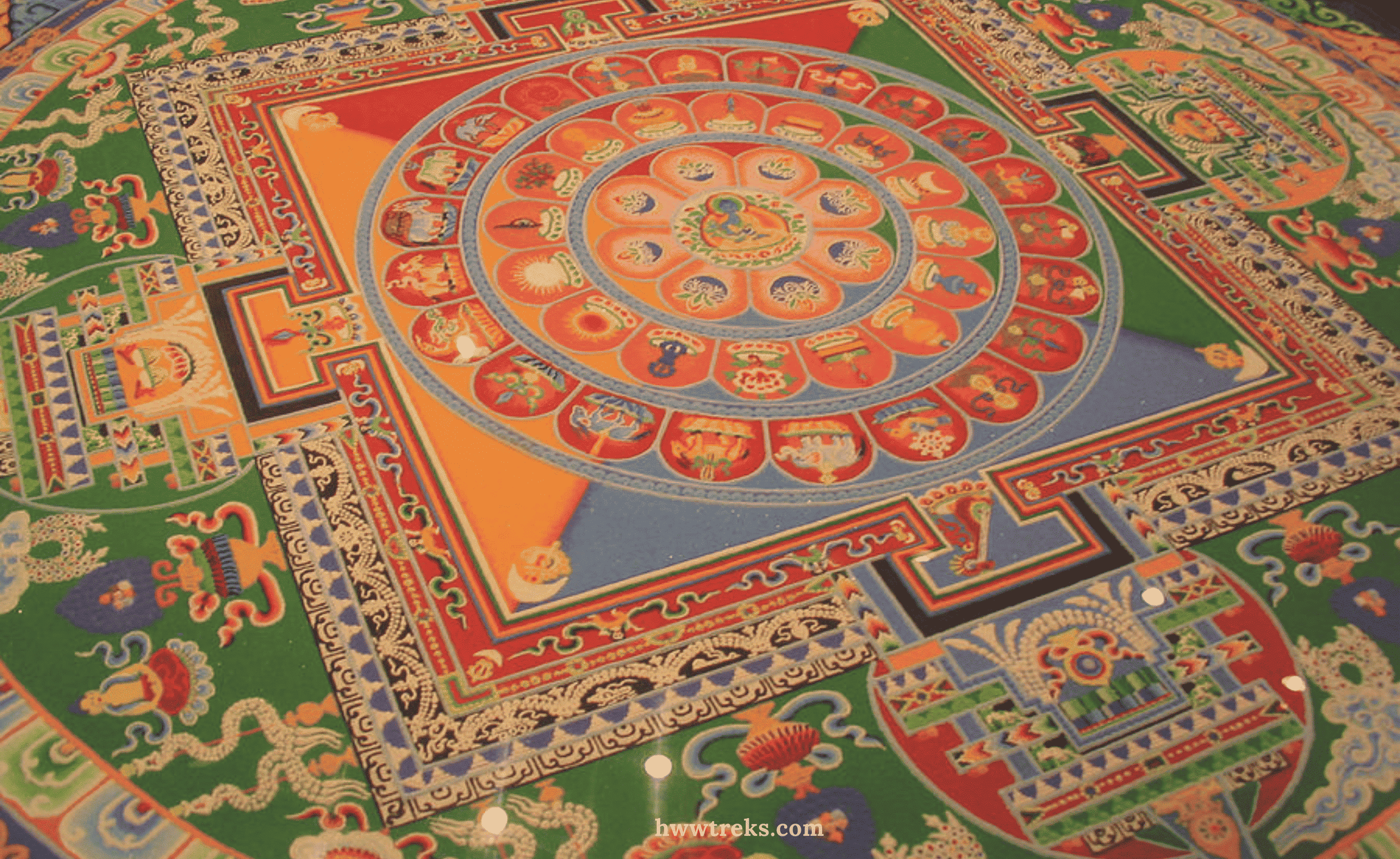 The tradition of the sand mandala was born within the spiritual practices of early Buddhist communities, where geometry, meditation, and ritual came together as one. Long before sand was used, mandalas existed as symbolic maps of the universe, tools to guide practitioners inward, toward clarity and awakening. These early mandalas were drawn or painted during meditation to represent harmony between the outer world and the inner mind. Historically, mandalas were first created as painted or drawn diagrams representing the universe. As Buddhism spread from India to Tibet around the 7th century, monks began transforming mandalas into intricate designs made from colored sand, allowing the ritual to become more symbolic and experiential. Each mandala is constructed according to strict spiritual guidelines, often depicting the celestial palace of a specific deity. In Tibetan monasteries, sand mandala creation became a respected ritual. The knowledge was never written casually or taught openly. Instead, it was passed carefully from teacher to student. Over time, specific mandalas like Vajrakilaya developed, each serving a unique spiritual purpose within ritual practice.
One of the most powerful aspects of the sand mandala is its ending. After days of meticulous work, the mandala is dismantled in a ceremonial act. This is not destruction but teaching an embodied lesson that beauty, effort, and even sacred forms are temporary. The sand is often returned to nature, completing the cycle of creation and release.
Meaning Behind the Sand Mandala
 A mandala is more than a pattern made of lines and colors; it is a visual language of the mind and spirit. In the Vajrakilaya tradition, the sand mandala becomes a sacred space where inner transformation takes shape. Vajrakilaya represents the fierce energy needed to cut through ignorance, fear, and obstacles that block clarity. The mandala created in his form is not meant to be admired only for its beauty, but to be experienced as a spiritual journey.
Each element of the Vajrakilaya sand mandala carries meaning. The center symbolizes awakened awareness, stable, powerful, and unshaken by confusion. Surrounding layers represent the challenges of human life: negative emotions, harmful habits, and mental distractions. As monks carefully place grains of sand, the act itself becomes a meditation, reminding us that change happens patiently, one small effort at a time. The symmetry of the mandala reflects balance, while its complex geometry shows how disciplined wisdom can organize even the most chaotic forces.
The use of sand is deeply symbolic. Despite the hours or days spent creating the mandala, it is eventually dismantled and returned to nature. This intentional destruction teaches impermanence, a core Buddhist understanding that nothing, not even something sacred, is meant to last forever. In the context of Vajrakilaya, this impermanence is not loss but liberation. It reflects the cutting away of attachment and the release of inner obstacles so that wisdom can flow freely. Ultimately, the Vajrakilaya sand mandala represents transformation through awareness and courage. It reminds us that obstacles are not enemies but opportunities for growth, and that clarity arises when we are willing to let go. The mandala exists not to remain intact, but to leave an imprint on the mind, encouraging strength, compassion, and mindful living long after the sand has disappeared.
Types of sand mandala
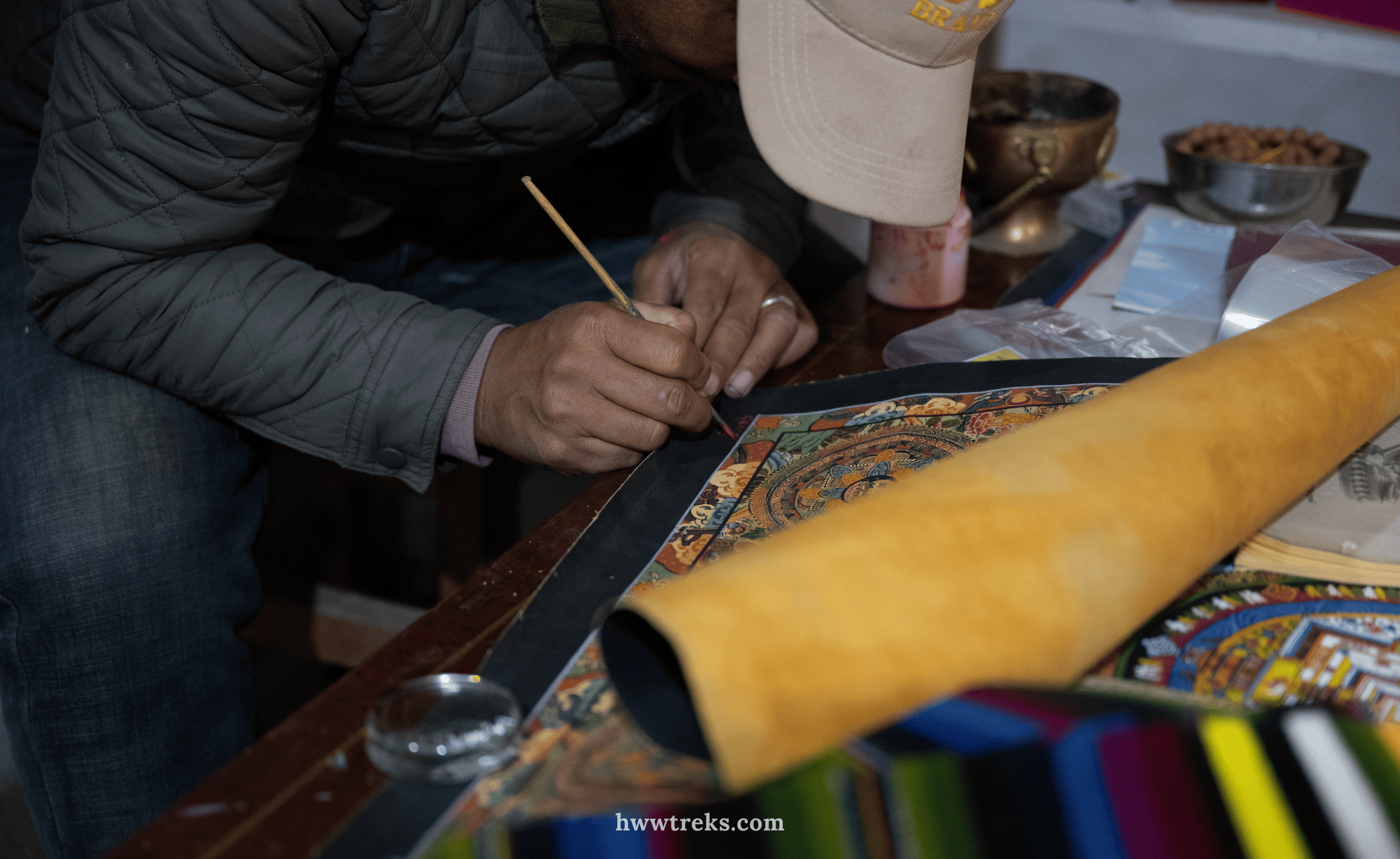 In the Vajrakilaya tradition, mandalas are not created just for visual beauty; each type represents a specific spiritual function and state of practice. Vajrakilaya mandalas are much more than visual patterns; they are sacred maps of spiritual energy. Each mandala serves a unique purpose and guides practitioners on different paths of meditation, healing, and transformation. Broadly, there are a few types of mandalas that are commonly seen in Vajrakilaya rituals and sand mandala ceremonies:
Healing Mandalas:
These mandalas are created to restore balance and clear obstacles, both in the mind and the environment. Every curve, color, and symbol is carefully chosen to cleanse negativity and restore balance. Watching a healing mandala being formed during a sand mandala ceremony is like witnessing a wave of calm spreading across the space, both meditative and energizing. The completed mandala is believed to radiate blessings that extend beyond the temple's walls, touching all who see it.
Meditation Mandala :
Some mandalas are designed purely for meditation and contemplation. Observing or mentally tracing the patterns can help practitioners concentrate, calm the mind, and experience deeper states of awareness. In sand mandala ceremonies, the very act of watching the mandala come together grain by grain becomes a meditative journey, encouraging mindfulness and inner peace.
Each mandala, while visually stunning, is deeply symbolic. From the moment the first grains of colored sand touch the surface to the ritual dismantling at the end, the mandala guides both the monks and the onlookers through lessons of impermanence, transformation, and spiritual awakening. In Vajrakilaya sand mandala ceremonies, these types of mandalas work together to create a sacred space where the energy of healing, protection, and wisdom flows outward, blessing everyone present.
Vajrakilaya Protection Mandalas:
Vajrakilaya, known for his fierce energy and ability to remove obstacles, inspires mandalas that radiate strength and protection. These mandalas are bold, filled with sharp geometric patterns and vivid colors, symbolizing the power to overcome inner and outer challenges. The creation of a Vajrakilaya mandala is an act of spiritual courage, a way to channel protective energy into the world while teaching the impermanence of all things.
Empowerment or Teaching Mandalas:
Other mandalas act as guides for spiritual growth. But teaching mandalas represent the journey toward wisdom and compassion, with each section of the mandala illustrating a step in the path of enlightenment. In a sand mandala ceremony, monks often explain the meanings behind the symbols, helping observers connect with the spiritual lessons embedded in the design. In this way, the mandala becomes both an artwork and a living classroom.
Cultural Significance of Sand Mandala
In the Vajrakilaya tradition, the sand mandala is a sacred act of transformation rather than a visual object. Its creation begins long before the first grain of sand is placed, arising from ritual preparation, intention, and the invocation of enlightened awareness. The mandala represents the enlightened realm of Vajrakilaya, a fierce yet compassionate force whose purpose is to cut through ignorance, inner conflict, and unseen obstacles that disturb harmony in both personal and collective life.
The cultural depth of the sand mandala lies in its disciplined process. The slow, deliberate placement of colored sand mirrors the Buddhist path itself, one built through patience, ethical conduct, and mindful awareness. Each geometric form carries layered meaning, mapping the relationship between the human mind and the cosmos. In Himalayan Buddhist culture, such ritual art is not separated from daily life; it becomes a method of teaching values such as focus, humility, and responsibility toward all beings.
Perhaps the most profound cultural teaching emerges at the moment of dissolution. After days of precise creation, the mandala is intentionally dismantled, returning its form to formlessness. This act reflects a deeply rooted understanding of impermanence not as loss, but as truth. In Vajrakilaya practice, the dissolution signifies the cutting away of attachment and fear, reinforcing the belief that liberation arises not from holding on, but from the courage to release.
The sand mandala ceremony also carries collective meaning beyond individual practice. Traditionally created for the benefit of the land, the people, and the environment, it is believed to restore balance where suffering or disruption exists. When the sand is dispersed into water or nature, its blessings are symbolically carried outward, extending the purpose of the ritual to all directions. Through this act, the Vajrakilaya sand mandala becomes a cultural bridge linking spiritual intention with community healing and ecological respect.
At its deepest level, the sand mandala preserves a way of knowing that resists speed, permanence, and possession. In a world driven by urgency and accumulation, the Vajrakilaya sand mandala stands as a quiet cultural statement: that meaning is found in mindful creation, shared intention, and graceful impermanence. It is within this silence, ritual, and release that its true cultural significance endures.
Materials used for Sand Mandala Creation
 In the practice of Vajrayana Buddhism, the creation of a sand mandala, especially within Vajrakilaya rituals, is both a spiritual discipline and a symbolic act. The materials used are intentionally simple, yet each carries layered meaning that reflects the teachings of transformation, impermanence, and mindful action.
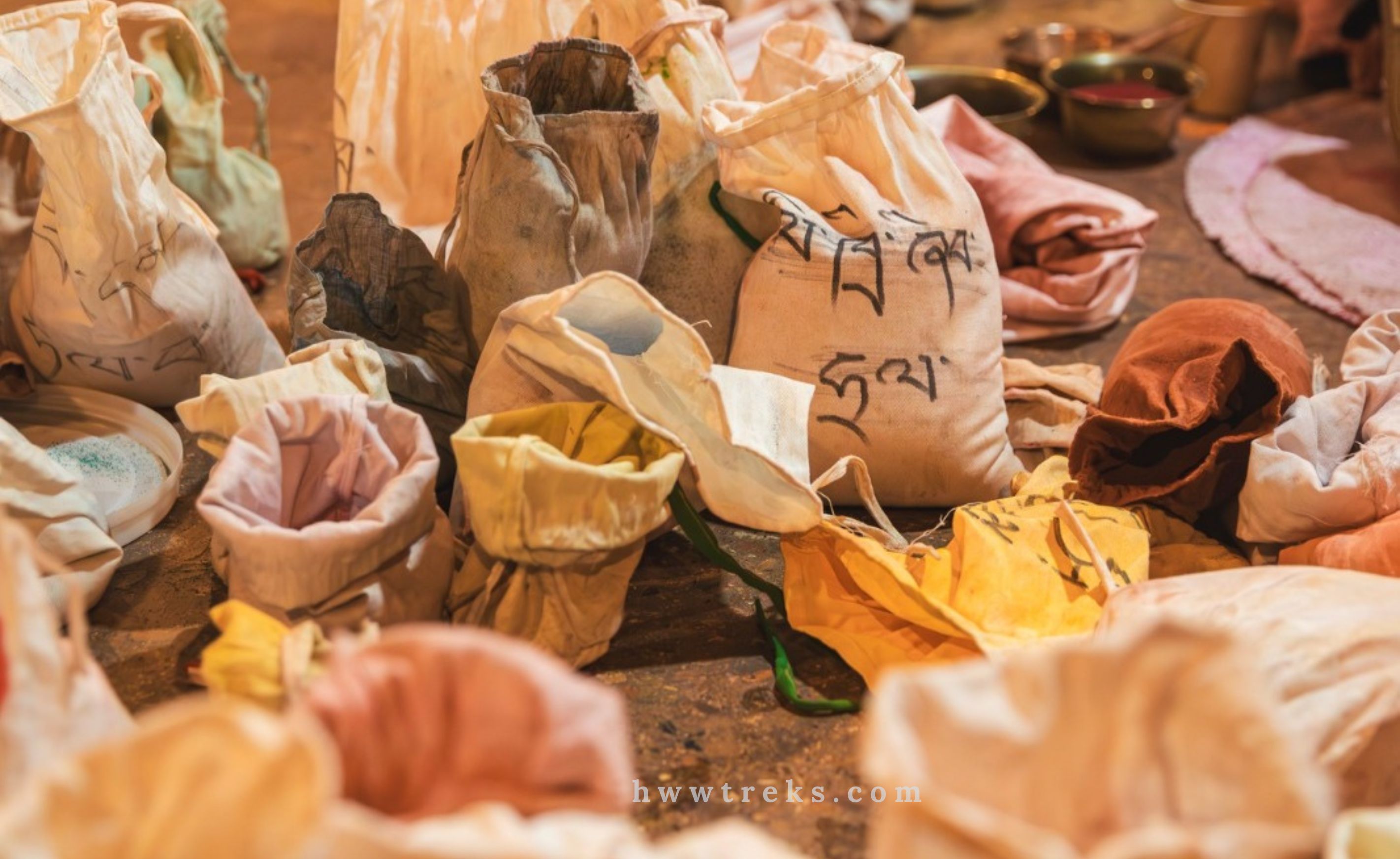
The central material is finely prepared sand, traditionally made by grinding natural stones, marble, or mineral substances into extremely small grains. This careful process transforms solid matter into something delicate and flowing, symbolizing the Vajrakilaya principle of breaking through rigid obstacles and dissolving negative forces. The sand itself represents the impermanent nature of existence, reminding practitioners that all forms, no matter how precise or beautiful, are temporary. To create the intricate patterns of the mandala, the sand is mixed with natural mineral-based pigments. These colors are selected according to symbolic significance rather than aesthetic preference. In Vajrakilaya mandalas, strong and intense colors are often used to express the powerful, protective energy of the deity. Each color embodies a specific quality, such as wisdom, compassion, purification, or enlightened action, contributing to the spiritual intention of the mandala.
The application of sand is carried out using traditional metal tools, most notably the chak-pur. This funnel-shaped instrument allows the sand to be released in controlled, precise lines. The slow and rhythmic movement required to use the chak-pur encourages deep concentration and mindfulness, turning the act of creation into a form of meditation. The mandala is constructed on a ritually prepared surface, typically a wooden platform or cloth base that has been purified through prayers and symbolic gestures. Before the sand is placed, geometric guidelines are drawn to establish the sacred structure of the mandala. These guidelines ensure that every element aligns with the symbolic universe represented in the design.
Supporting materials such as incense, ritual lamps, and sacred recitations surround the workspace, creating a spiritually charged environment. Although these elements do not form part of the mandala itself, they reinforce the ritual context and deepen the significance of the creation process.
Together, these materials serve a purpose beyond physical construction. They transform ordinary substances into a sacred expression of Vajrakilaya practice, ultimately reinforcing the core teaching that creation and dissolution are inseparable, and that spiritual realization arises through mindful engagement rather than attachment.
Rules of Sand Mandala creation
The rules of Sand Mandala creation are not merely instructions for forming an image; they are disciplines for shaping the mind and spirit. In the Vajrakilaya tradition, these rules carry a deeper responsibility because the mandala is believed to embody the enlightened energy of transformation and protection.
The first and most profound rule is inner readiness. Before a single grain of sand touches the ground, the practitioner must settle their thoughts and emotions. A restless or impure mind cannot create a pure mandala. This preparation often takes days of prayer and mantra recitation, aligning the creator with the fierce yet compassionate nature of Vajrakilaya. The mandala becomes a reflection of the inner state of the practitioner, not just a visual form. The second rule is absolute devotion to order. The mandala is constructed from the center outward, following sacred geometry that mirrors the structure of the universe. Nothing is random. Each shape represents a direction, a quality of consciousness, or a protective force. In Vajrakilaya mandalas, this order symbolizes the cutting through of chaos and ignorance. To follow the design faithfully is to surrender personal ego and trust ancient wisdom. Another essential rule is discipline of presence. The act of placing sand is slow, intentional, and repetitive. There is no space for haste or impatience. Every grain is placed as if it carries meaning, because it does. This discipline trains the mind to remain fully present, turning the act of creation into continuous meditation. In silence, the mandala grows, and with it, inner clarity. Respect for impermanence is perhaps the most challenging rule. The creator must work with full devotion, knowing the mandala will soon be dismantled. In the Vajrakilaya practice, this rule teaches detachment from results. Power does not lie in holding on, but in the ability to release. The destruction of the mandala is as sacred as its creation, reminding us that transformation requires letting go.
The final rule is being offered without ownership. Once completed, the mandala no longer belongs to its creators. It becomes an offering to all beings, a vessel of blessings meant to dissolve suffering and obstacles. When it is swept away, the sand is often returned to nature, carrying prayers into flowing water. In this way, the mandala fulfills its purpose not by remaining, but by disappearing.
Symbolism within the Sand mandala
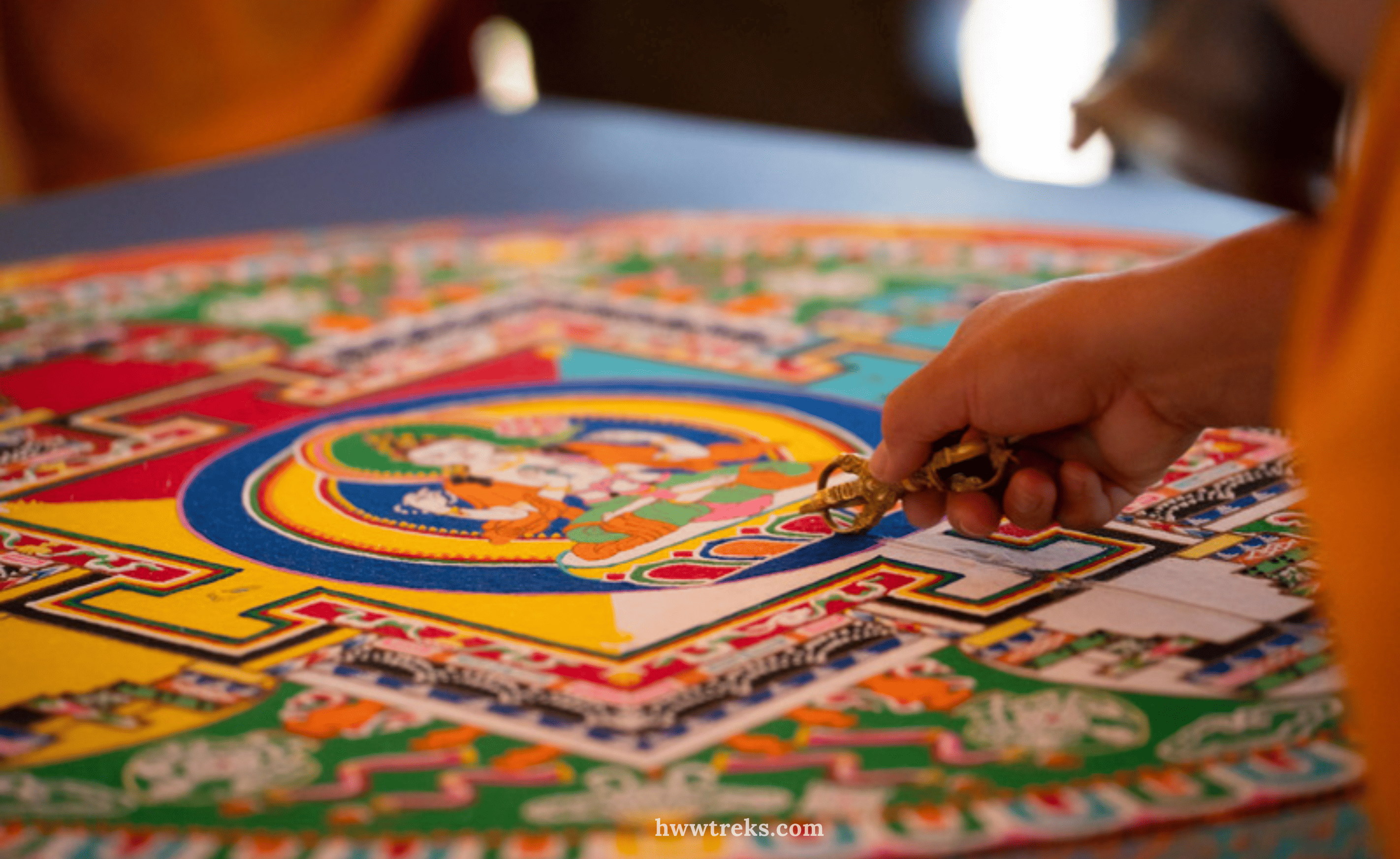 The Vajrakilaya Sand Mandala is not just a ritual artwork; it is a living map of the cosmos, the mind, and the spiritual path. Every grain of sand, every curve, every color is intentionally placed, reflecting profound teachings that have guided practitioners for centuries. The mandala is a visual prayer, a symbolic universe that conveys truths that words often cannot capture.
At the center of this sacred design is Vajrakilaya, the wrathful deity of enlightened activity. Though his appearance may seem fierce, his purpose is compassionate: to destroy spiritual obstacles, inner fears, and karmic barriers that prevent the mind from realizing its true nature. Surrounding Vajrakilaya are geometric patterns, squares, circles, and lotus petals, each representing layers of consciousness, stages of meditation, and the structure of reality itself. The square outer boundary acts as a sacred protective space, symbolizing the stability and order needed for spiritual practice. The circular forms mirror the cyclical nature of existence, reminding observers that life is a continuous interplay of creation, preservation, and dissolution.
Colors in the mandala are not mere decoration; they are vibrational symbols of spiritual qualities. White reflects clarity, purity, and the illumination of wisdom. Red embodies transformative energy, passion, and the courage to face inner darkness. Blue symbolizes infinite depth, introspection, and the calm strength of awareness. Yellow grounds the observer, connecting the mind to generosity and ethical action, while green represents balance, healing, and the interconnectedness of all life. When viewed as a whole, the interplay of these colors creates a microcosm of the universe, a visual meditation that guides the mind toward harmony and insight. The process of constructing the mandala is itself deeply symbolic. Monks carefully layer the sand grain by grain, a meditative act that embodies patience, mindfulness, and devotion. Each precise movement reflects the subtle work of transforming one’s mind, dissolving the ego, and cultivating compassion. The mandala’s eventual dismantling underscores the principle of impermanence (anicca), one of the core Buddhist teachings. Though the creation is painstakingly beautiful, it is never permanent; the sand is scattered into water, symbolizing the transient nature of all things and the importance of letting go of attachment. This act also spreads blessings and positive energy, reinforcing the belief that spiritual practice benefits not only the self but all beings. On a deeper level, the Vajrakilaya Sand Mandala mirrors the inner landscape of consciousness. The intricate patterns guide meditation, helping practitioners navigate the complexity of thought, emotion, and perception. The outer forms represent discipline and ethical boundaries, while the inner forms invite introspection, self-awareness, and the cultivation of wisdom. In this way, the mandala becomes both a mirror and a guide, a sacred tool to explore the subtle workings of the mind and the mysteries of the universe.
Ultimately, the Vajrakilaya Sand Mandala is a living symbol of transformation, protection, and awakening. It teaches that true strength arises from compassion, that clarity arises from mindfulness, and that all things beautiful or painful are transient. Observing or participating in its creation is not merely a visual experience but a profound journey into the heart of spiritual truth, offering lessons that remain long after the last grains of sand have been carried away.
Conclusion
The Vajrakilaya Sand Mandala Ceremony is a profound expression of devotion and spiritual artistry. Its delicate patterns embody protection, wisdom, and the transformation of obstacles, reminding us of life’s impermanence and the beauty of mindful presence. In its creation and dissolution, the ceremony leaves a lasting impression of inner peace and spiritual awakening.
Book your next trip to Upper Mustang to witness Sand Mandala ceremony.
Frequently Asked Questions
Find answers to common questions about our services
A sand mandala is more than just art; it's a spiritual practice. It represents the universe and the balance of life, helping both the creators and observers focus, meditate, and reflect on deeper truths. Each color, pattern, and symbol carries meaning, and the process of making it is meant to bring clarity, peace, and positive energy into the world.
After its creation, the sand mandala is carefully swept away. This is a powerful lesson in impermanence, showing that nothing lasts forever. By dismantling it, the energy and blessings of the mandala are released into the environment, spreading healing and reminding us to cherish each moment.
Sand mandalas are made by trained Buddhist monks. Crafting one requires patience, steady hands, and intense concentration. The monks must visualize the entire design in their mind and pay attention to every tiny detail, making the creation both an artistic and spiritual discipline.
Building a sand mandala is a careful, time-consuming process that can take several days or even weeks. Monks usually work together as a team, completing the design step by step, starting from the center and working outward, carefully placing each grain of sand to bring the intricate patterns to life.
No questions found matching your search. Try different keywords or browse all questions above.